
In job interviews, my nervousness makes me freeze up
"I have prepared everything. But then something unexpected happens, my mind goes blank, and I cannot find my words."
You have prepared carefully. You know your career, your strengths and the answers to the standard questions. But then something unexpected happens: a question you did not expect, a silence, a sceptical look. Your mind goes blank, your voice changes, and the words you know so well are suddenly gone.
Nervousness before an interview is normal, and many people experience it. For experienced professionals who interview in a second language or in a new country, the stakes often feel even higher. When the pressure rises, it can become hard to think clearly, and even harder to do so in German.
Even worse: When nervousness takes over, the interviewer sees your nervousness, and not your competence.
The reasons are different for everyone, so the right kind of help is too. Sometimes it is about preparation, sometimes about language, sometimes about how you deal with pressure and being judged.
Being nervous in a job interview is normal, and it does not mean that you are not qualified. An interview is a situation in which you are being evaluated, the outcome matters, and you cannot fully control what happens. In a second language or a new country, there is often an added layer: you also worry about words, about unwritten rules and about how you come across.
There are several common reasons. Past experiences, such as earlier rejections, can make you expect the worst. High stakes, such as a residence situation, family or a career restart, increase the pressure. And when you tell yourself that you must not make a mistake, the demand on yourself grows.
These reasons can lead to a similar result: under stress, thinking and finding words becomes harder, and the very thing you fear starts to happen.
First, a short blank moment is much less noticeable to the interviewer than it feels to you. Give yourself permission to pause. A few seconds of silence can seem like thinking.
Then use a simple routine:
- Breathe out slowly once, and let your shoulders drop.
- Buy time with a phrase, for example 'Let me think about that for a moment' or 'I have never thought about that topic from this perspective. Let me structure it.'.
- Repeat or rephrase the question: 'If I understand you correctly, you are asking about…'
- Start with one sentence that you know is true, and let the next one follow.
If you interview in German, it helps to practise these phrases out loud until they come automatically. Having them ready takes away the fear of being left without words.
More preparation does not always help. If you memorise answers word for word, one unexpected question can break the whole script. A better approach is to prepare building blocks: your key messages, a few examples and the phrases that help you think aloud.
It also helps to practise under mild pressure. Do a mock interview with someone who asks unexpected questions, record yourself, or practise in a place that feels slightly uncomfortable. The goal is not to remove nervousness, but to practise coming back from it.
Finally, notice what helps you before the interview, such as a walk, a few minutes of quiet or a familiar routine, and plan it in. Small habits like these can make the first minutes much easier.
Emergency tip: use your body as a shortcut. Your posture and your state of mind are closely connected. When you are tense, your body shows it, and a tense body makes clear thinking and speaking harder. This also works the other way round, and you can train it:
- Before the interview: Find a relaxed posture that feels good to you, for example both feet firmly on the floor, shoulders dropped, jaw loose and a slow breath out. Practise it until you can find it quickly.
- Notice your tense posture: Then show yourself on purpose how you look when you are tense: shoulders raised, breath high, hands clenched. Notice how it feels in your body and in your thinking.
- Practise the transition: Move slowly from the tense posture to the relaxed one, several times, and notice what changes. This is your way back.
During the interview, notice early when your body tightens. Then bring yourself quietly back into your relaxed posture, without anyone seeing it: feet on the floor, shoulders down, one long breath out. Many people find that this helps them to return to thinking and speaking more easily, because the body gives the mind a clear signal that the situation is under control.
For international professionals interviewing in Germany, Austria or Switzerland, it is useful to separate three questions:
- Do I have a simple routine for the moment when I feel blocked?
- Do I have the German words and phrases to gain time and find my way back?
- Can I trust myself to recover, even when something unexpected happens?
Each question points to a different kind of help. Interview training offers routines and mock interviews with realistic pressure. Language training builds the vocabulary and phrases you need to gain time and to say what you mean. Coaching looks at what triggers the blockage, such as fear of being judged or high expectations of yourself, and helps you to build more trust in yourself.
Often several of these play a role. The six questions on this page help you see which one to start with.
If your nervousness is very strong, lasts for a long time or also affects other parts of your life, it is a good idea to seek support from a coach or therapist as well.
The following six questions show you where to look.
Let's find out what could help you in this situation
How would your problem change if this interview did not feel like your only chance?
How would your problem change if you had practised in mock interviews with unexpected questions and realistic pressure?
How would your problem change if you could express yourself in German under pressure as freely as you do when you are relaxed?
How would your problem change if you believed that you do not have to answer perfectly to be convincing?
How would your problem change if you felt as calm and clear in the interview as you do in your best moments at work?
How would your problem change if you felt that being rejected would not mean that you do not belong here?
What your responses tell you
Take a moment to look at what came up. Which of these ideas feels most familiar? Do you already see a first step you could try, perhaps something small, in your next preparation or conversation?
For some people, one or two of these ideas are enough to change how they prepare. For others, the same patterns return, especially when the pressure is high. If that sounds like you, it may help to look at the situation with someone alongside you. This is what the next section is about.
Finding a Solution That Holds Up Even Under Pressure
You may already have tried the usual remedies: preparing even more, practising your answers, improving your German, learning relaxation techniques. They help, and they are worth doing. Language training gives you the words you need. Interview training gives you routine and structure. But neither changes what happens inside you when something unexpected throws you off, and that is often the moment the freeze begins.
Systemic coaching starts one step earlier. We look at what triggers your reaction: what you expect of yourself, what you fear could happen if you do not find the right answer, and how you think the other person sees you. We also look at the moments in which it already works, when you are calm, clear and in contact. From there we work towards a way of handling pressure that fits you and your professional reality, not a technique you have to remember in the moment.
Signs that it is working:
- You notice your nervousness, and it does not take over.
- If your mind goes blank, you have a way to come back within a few seconds, for example with a pause or a question.
- A surprising question feels like a challenge you can meet, not like a threat.
- All of this still holds when the atmosphere is cool or the stakes are high.
About me
I am a solution-oriented, certified management coach, a business transformation consultant and manager, and a native German speaker. My background is in international management, leadership and organisational transformation.
Over many years, I have worked with professionals and leaders in complex international environments. There, expertise alone is rarely enough: people also need to communicate their experience, position themselves clearly and navigate different expectations and ways of working. My own international experience spans Europe, Africa, North and South America, and today I combine coaching with training in Business German.
If nervousness blocks you in interviews, I will not simply tell you to 'relax' or to 'breathe'. Being nervous is human, and it often shows how much the job matters to you. The question is what happens next: what triggers the freeze, what you tell yourself in that moment, and what helps you find your way back. As a native German speaker and solution oriented, systemic business coach, I know how such moments are experienced in German-speaking interviews, and what makes it easier to recover. Together we look at what blocks you, at the moments in which you are calm and clear, and at what would help you stay present when it counts.
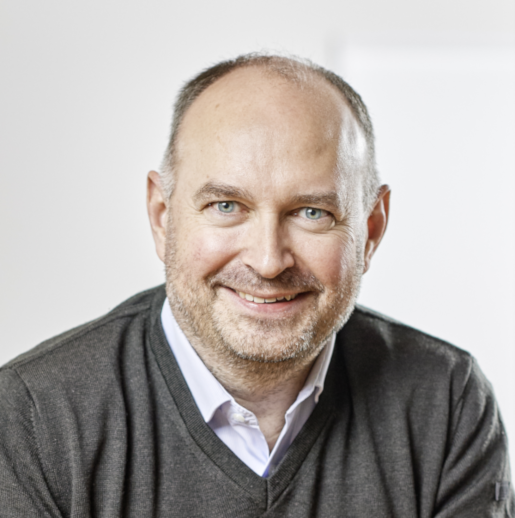 I offer a free chemistry call to personally connect, share how I work with clients, and see if my coaching approach aligns with your goals.
It's the perfect opportunity to decide if we're a good match for your interview preparation.