
In job interviews, I give answers that are too long
"I am afraid that if I leave something out, they will think I know less than I do. So I say everything. And somehow it sounds like less."
You know your subject, and you want to be understood, so you keep explaining. It feels thorough. But the more you say, the harder it becomes for the other person to hear your point.
The reasons are different for everyone, so the right kind of help is too. Sometimes it is practical knowledge, sometimes language, sometimes how you see yourself.
Giving long answers in a job interview does not necessarily mean that you lack structure or communication skills. Sometimes, you are trying to make sure the interviewer understands the full extent of your experience. Sometimes, you are searching for the right words in German. And sometimes, you feel that every answer has to prove your professional value.
These different situations can produce a similar result: your main point becomes harder to recognise because it is surrounded by too many details.
Start by identifying the main message you want the interviewer to remember. Give a direct answer first, then add one relevant example or piece of evidence. Stop when you have made your point, and allow the interviewer to ask for more detail.
For example, instead of describing every step of a complex project, you could briefly explain the challenge, your contribution and the outcome. This gives the interviewer a clear structure while leaving room for a deeper discussion.
However, knowing how to structure an answer does not always make it easy to do so in a real interview. If you worry that a short answer will make you appear less competent, you may continue explaining even when you already know what your main point is.
For international professionals interviewing in Germany, Austria or Switzerland, it can therefore be useful to distinguish between three questions:
- Do I know how to structure a concise answer?
- Can I express my main point clearly in German?
- Can I trust my answer to stand on its own, even when I feel under pressure?
Each question points towards a different way of improving your interview performance.
The following six questions show you where to look.
Let's find out what could help you in this situation
How would your problem change if you knew exactly how long and how structured an answer is expected in this interview?
How would your problem change if you had a fixed structure for every answer that you had already practised many times?
How would your problem change if you had all the words and phrases ready that you need for a short, precise answer?
How would your problem change if you could trust that your competence would be recognised even when you did not explain everything?
How would your problem change if you did not have to prove yourself, and could simply show up as the experienced professional you are?
How would your problem change if you were certain that you are welcome here, regardless of your background, accent or CV?
What your responses tell you
Take a moment to look at what came up. Which of these ideas feels most familiar? Do you already see a first step you could try, perhaps something small, in your next preparation or conversation?
For some people, one or two of these ideas are enough to change how they prepare. For others, the same patterns return, especially when the pressure is high. If that sounds like you, it may help to look at the situation with someone alongside you. This is what the next section is about.
Finding a Solution That Holds Up Even Under Pressure
You may already have tried the usual remedies: practising answers, learning the rules, improving your German. They help, and they are worth doing. Language training gives you the words for a short answer. Interview training gives you a structure to follow. But neither changes what happens inside you when a question catches you off guard, and that is often the moment your answers start to grow again.
Systemic coaching starts one step earlier. We look at what makes you reach for one more explanation: what you expect of yourself, what you fear might be overlooked, and how you think the other person sees you. From there we work towards a way of answering that fits you and your professional reality, not a technique you have to remember in the moment.
Signs that it is working:
- You finish an answer and stop, without feeling that something is missing.
- A pause feels like room to think, not like a gap to fill.
- You can ask 'Shall I go into more detail?' instead of guessing.
- All of this still holds when a question surprises you.
About me
I am a solution-oriented, certified management coach, a business transformation consultant and manager, and a native German speaker. My background is in international management, leadership and organisational transformation.
Over many years, I have worked with professionals and leaders in complex international environments. There, expertise alone is rarely enough: people also need to communicate their experience, position themselves clearly and navigate different expectations and ways of working. My own international experience spans Europe, Africa, North and South America, and today I combine coaching with training in Business German.
If your answers keep growing, I will not simply tell you to be shorter. Long answers rarely come from a lack of skill. More often they come from the wish to be fully understood, or from doubt about whether your competence will be seen. As a native German speaker and Business German trainer, I know how such answers are heard in German-speaking interviews. Together we look at what is behind your pattern, and at what would help you say what matters with clarity and calm.
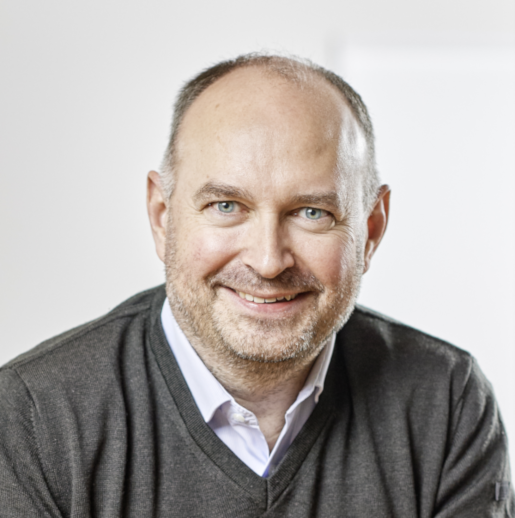 I offer a free chemistry call to personally connect, share how I work with clients, and see if my coaching approach aligns with your goals.
It's the perfect opportunity to decide if we're a good match for your interview preparation.