
German Job Interviews for US Graduates: 7 Cultural Differences and How to Adapt
Written by Gernot Sauerborn, Systemic Management Coach for International Experts in German Speaking Countries
Last Update: November 7, 2026
US graduates typically arrive with confidence, initiative, and a clear sense of their potential. In Germany, Austria and Switzerland, hiring managers also look for reliability and readiness to learn: Can this person grow step by step into responsibility within an existing team?
Keep your drive and add precision. Both together make a convincing impression.
Most Important Cultural Differences
| USA | German Speaking Countries | |
|---|---|---|
| Self-Image | High potential | Reliable contributor |
| Communication | Confident & expressive | Precise & factual |
| Learning | Fast & self-directed | Structured & guided |
| Responsibility | Early ownership | Stepwise responsibility |
| Feedback | Direct & individual | Formal & role-based |
| Career Logic | Acceleration | Qualification |
| Positioning | Personal strengths | Fit with role & team |
How to Adapt to Cultural Differences For German Job Interviews
Confidence and ambition are real strengths. Pair them with one example that shows you also learn from others and grow into responsibility.
- USA: Graduates present themselves as high potentials with strong individual capabilities and ambition.
- Germany, Austria, and Switzerland: Without a track record, 'high potential' can sound like a claim rather than a fact. A statement such as 'I learned X from my team lead and applied it in Y' is easier for a hiring manager to believe, and it shows that you will integrate well.
Energy and storytelling make you memorable. Keep them and add a precise fact to every answer, such as a number, a method, or a result.
- USA: Personal motivation, passion, and storytelling are emphasized.
- Germany, Austria, and Switzerland: Enthusiasm without detail can come across as vague, and some interviewers will read it as a lack of substance. Start with the facts and let your energy carry the story afterward, so both are heard.
Your drive to learn quickly on your own is valuable. Show that you also use mentors, training, and feedback to learn more thoroughly.
- USA: Learning is framed as fast, autonomous, and initiative-driven.
- Germany, Austria, and Switzerland: 'I teach myself everything' can leave the impression that you do not plan to ask for guidance. Employers often invest in onboarding, so they like candidates who say how they want to be mentored and what they want to master first.
Taking ownership early is a strength. Show that you also know where your responsibility ends and when to align with others.
- USA: Early ownership and proactive responsibility are seen as strengths.
- Germany, Austria, and Switzerland: Claiming ownership of a lot may raise concerns about risk awareness in an organization where responsibilities are assigned gradually. Describing the scope of your role and the moment you checked with others shows maturity.
You are used to open, direct feedback, which is a strength. Show that you also value clear expectations and formal appraisals.
- USA: Feedback is direct, personal, and informal.
- Germany, Austria, and Switzerland: Feedback is often tied to a role, a goal, or a review date, and can feel more formal than you expect. Asking 'How is performance measured in this role?' shows that you want clear criteria.
Ambition for growth is welcome. Show that you also want to build deep expertise and qualifications along the way.
- USA: Career progression is framed as acceleration and early advancement.
- Germany, Austria, and Switzerland: Questions about fast promotion in a first interview can suggest that you may leave soon. Employers usually plan development over years, so describe the skills and qualifications you want to build in this role first.
Your strengths deserve to be heard. Link each of them to what the role and the team need.
- USA: Focus on personal strengths, uniqueness, and individual contribution.
- Germany, Austria, and Switzerland: A list of personal strengths answers 'Who are you?', but the hiring manager is asking 'Will you fit here?'. Explain how your strengths serve this team's work and how you would work with colleagues.
Some Answers adapted to D-A-CH Interview Culture
- From "I am highly motivated, learn fast, and like to take ownership early on." to "I am motivated to learn systematically and to take on responsibility step by step within a well-defined role."
- From "I enjoy working independently and bringing my own ideas into the organization." to "I value clear structures and enjoy contributing ideas once I fully understand the processes and expectations."
- From "I am looking for a role where I can quickly make an impact." to "I am looking for a role where I can build a solid professional foundation and contribute reliably over time."
- From "I am very confident in my abilities and eager to prove myself." to "I am keen to apply my skills responsibly and to continuously develop them through feedback and experience."
- From "I like open discussions and direct feedback." to "I appreciate structured feedback and clear expectations that help me improve my performance."
Special Advice from my Perspective as Management Coach
Try this: facts before adjectives (10 min).
- Write down your usual answer to 'Why should we hire you?'
- Underline every adjective and superlative, such as 'passionate', 'fast learner', 'great'.
- Replace each one with a fact: a number, a method, a result, or a short example.
- Add one sentence about what you want to learn in this role.
- Read it aloud. It should sound calm and concrete, with your energy still audible.
Your Next Step
If you want to explore this further, my German interview coaching offers a structured space to practice real interview situations, refine personal positioning, reduce nervousness, and build confident presence — even in unfamiliar cultural environments.
At the same time, you can practice your German communication skills in a secure environment.
Explore other guides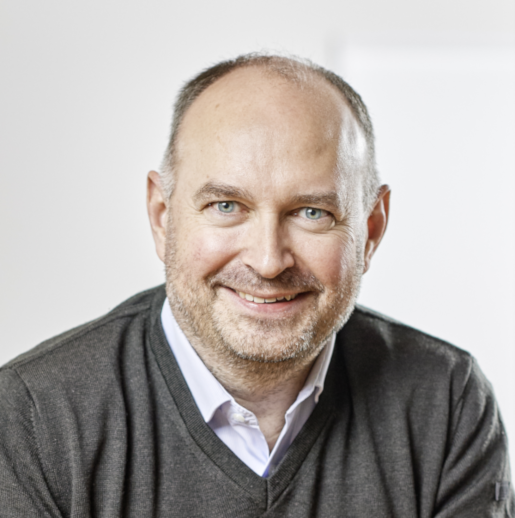 Not sure how these cultural differences relate to your own interview situation? In a free chemistry call, we can discuss your professional background, your experience and the expectations you may encounter in German-speaking job interviews.
Together, we'll explore how you can communicate your strengths clearly and confidently.
It's a first opportunity to see whether my coaching is the right next step for you.