
German Job Interviews for Romanian Graduates: 5 Cultural Differences and How to Adapt
Written by Gernot Sauerborn, Systemic Management Coach for International Experts in German Speaking Countries
Last Update: November 7, 2026
Romanian graduates often combine solid technical or academic training with strong language skills and a talent for adapting quickly. Hiring managers in Germany, Austria and Switzerland look beyond the diploma: What have you already done with your knowledge, and how do you work in a team with clear processes?
Your adaptability and your qualifications remain your strengths. The interview is the place to connect them with concrete experience and a clear profile.
Most Important Cultural Differences
| Romania | German Speaking Countries | |
|---|---|---|
| Core Asset | Diploma, languages & academic results | Applied experience, internships & projects |
| Resourcefulness | Finding a way around obstacles | Flagging obstacles early and solving them transparently |
| Communication | Polite, detailed & rich in context | Main point first, then context |
| Rules & Processes | Flexible handling of rules under pressure | Agreed processes, changed openly |
| Positioning | Versatile and ready for any task | Clear profile with a defined area of strength |
How to Adapt to Cultural Differences For German Job Interviews
Your degree and languages are a solid start. Add one example of applying them, such as an internship, a project, or a working-student job.
- Romania: The primary asset is a strong academic record, often combined with a good command of several languages. A diploma and formal results are respected signals of ability and effort, and they open doors with many employers.
- Germany, Austria, and Switzerland: A good degree is expected, so it rarely decides an interview by itself. Hiring managers look for practical contact with the field: an internship, a thesis written with a company, a project with real users. Even a small example shows that you can transfer knowledge into daily work and know what a workplace expects.
Your talent for finding a way is valuable. Keep it, and add the habit of saying early what you are doing and why.
- Romania: Initiative is often shown through resourcefulness: when conditions are not ideal, graduates find a workaround and get the task done. Being able to improvise with limited time or information is seen as a mark of competence and commitment.
- Germany, Austria, and Switzerland: A creative workaround that nobody knew about can surprise a team, and not always pleasantly, because others may depend on the original approach. A story with a clear sequence works better: you noticed the obstacle, informed the people affected, tried a solution, and documented the result.
Warm, thorough answers show respect for the question. Keep them, and open with your main point in one sentence.
- Romania: Communication tends to be polite, detailed, and rich in context. Answers often begin with background and build toward the point, and formal address and courtesy toward senior people show respect.
- Germany, Austria, and Switzerland: Long answers that reach the point late make it hard for interviewers to follow your message, and some will assume you are unsure. A short opening statement such as 'My main reason was...' followed by two supporting examples keeps the courtesy and gives them something to evaluate quickly.
Flexibility helps when conditions change. Show that you also respect agreed processes and suggest changes openly.
- Romania: Rules and procedures are often seen as a starting point that can be adjusted when circumstances demand. Graduates may learn early that results matter more than the exact route, and that practical flexibility is rewarded.
- Germany, Austria, and Switzerland: Where procedures protect quality, safety, or legal compliance, skipping a step can be read as carelessness even when the result is good. The more convincing account says: 'I followed the process, found where it slowed us down, and proposed a change to my team lead.'
Versatility is an asset in a changing market. Name one area of strength and show that your flexibility builds on it.
- Romania: Graduates often position themselves as hard-working, adaptable, and ready to take on whatever tasks come up. Covering many tasks signals commitment and makes a candidate attractive to employers.
- Germany, Austria, and Switzerland: 'I can do anything' leaves open what you are best at, and selection decisions are often about the fit with a specific role. A profile with a clear focus, for example 'My strength is data analysis, and I am also comfortable presenting results', is easier to match with a position.
Some Answers adapted to D-A-CH Interview Culture
- From "I have a good degree and speak several languages, so I can learn anything quickly." to "I combine my degree and language skills with practical experience. For example, during my internship at [company] I [specific task], and I want to keep building this expertise in [area]."
- From "If there is an obstacle, I find a way to solve it on my own." to "When I meet an obstacle, I try a solution myself and tell my team early what I did and why. This way my resourcefulness stays useful and transparent."
- From "I answer every question as completely as possible, with all the background." to "I start with the main point in one sentence and then add context, so the listener can follow and ask for more if needed."
- From "If a rule is not practical, I look for a faster way to reach the goal." to "If a process seems impractical, I follow it first, note what slows it down, and suggest an improvement to my supervisor."
- From "I am flexible and can do any task that is needed." to "I am flexible, and my strongest area is [field]. This is where I can contribute most and where I want to deepen my skills."
Special Advice from my Perspective as Management Coach
Try this: the one-sentence opener (15 min).
- Take three typical questions: 'Tell me about yourself', 'Why this company?', 'Describe a challenge you solved'.
- Write your usual answer to each one.
- Underline the main point and move it to the first sentence.
- Keep two supporting examples and cut the rest. Aim for 60 to 90 seconds per answer.
- Say them aloud and record one. Is the main point clear within ten seconds, and does the warmth still come through?
Your courtesy and your attention to detail stay. The opener makes them easy to follow.
Your Next Step
If you want to explore this further, my German interview coaching offers a structured space to practice real interview situations, refine personal positioning, reduce nervousness, and build confident presence — even in unfamiliar cultural environments.
At the same time, you can practice your German communication skills in a secure environment.
Explore other guides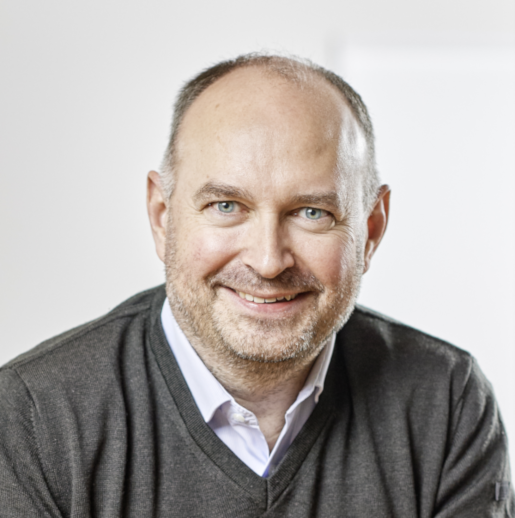 Not sure how these cultural differences relate to your own interview situation? In a free chemistry call, we can discuss your professional background, your experience and the expectations you may encounter in German-speaking job interviews.
Together, we'll explore how you can communicate your strengths clearly and confidently.
It's a first opportunity to see whether my coaching is the right next step for you.