
German Job Interviews for Chinese Graduates: 5 Cultural Differences and How to Adapt
Written by Gernot Sauerborn, Systemic Management Coach for International Experts in German Speaking Countries
Last Update: November 7, 2026
Chinese graduates are often diligent, well prepared, and respectful. Interviewers in Germany, Austria and Switzerland rarely read these qualities between the lines, so they ask directly: What can you do, what do you want, and how will you take responsibility?
Keep your reliability and add the words that make it visible.
Most Important Cultural Differences
| China | German Speaking Countries | |
|---|---|---|
| Self-Presentation | Modest & implicit | Clear & explicit |
| Acceptance of Authority | Respect-based | Role-based |
| Communication | Indirect & context-driven | Direct & structured |
| Motivation | Collective contribution | Individual role clarity |
| Responsibility | Instruction-oriented | Task & result ownership |
How to Adapt to Cultural Differences For German Job Interviews
Modesty shows good manners. Keep it, and add concrete examples of what you did, so the interviewer can see your skills.
- China: Graduates demonstrate professionalism through restraint, modesty, and effort. Speaking too openly about oneself may be seen as inappropriate or boastful.
- Germany, Austria, and Switzerland: A modest answer such as 'I am just an ordinary student' leaves the interviewer with nothing to evaluate. What they notice is evidence: a project, a result, and your own part in it. Describing it factually is read as professionalism, not as boasting.
Respect for seniority is a strength. Add that you also share your own ideas and questions, whoever sits across the table.
- China: Authority is derived from respect for seniors and formal hierarchy. Graduates avoid questioning or proactive positioning.
- Germany, Austria, and Switzerland: Interviewers often want a conversation between colleagues, even with a younger or less experienced candidate. A well-prepared idea or a thoughtful question is rarely seen as a challenge to their position. It shows that you think for yourself within your role.
Considerate, harmonious communication is a real skill. Add a clear answer in your first sentence, and allow yourself to say 'no' or 'I do not know yet'.
- China: Communication is contextual and indirect to preserve harmony and respect. A 'no' is often avoided in order not to lose face or confront other people.
- Germany, Austria, and Switzerland: An answer that circles around the point can be read as uncertainty or lack of knowledge, not as politeness. Short, structured answers are welcome, and so is an honest 'I do not know yet, but this is how I would find out'.
Your commitment to the team and your gratitude are valued. Add what you personally want to learn and achieve in this role.
- China: For Chinese graduates, motivation is often framed in collective terms rather than individual ambition. Candidates tend to emphasize loyalty to the organization, gratitude for opportunities, and willingness to contribute to the group’s long-term success. Personal career goals are frequently subordinated to stability, learning, and being a reliable team member.
- Germany, Austria, and Switzerland: Loyalty and gratitude are appreciated, but on their own they can sound generic. Interviewers want to hear why this role and this company, and what you want to learn in the next few years. Naming your own goals is not seen as selfish; it signals self-reflection and ownership.
Carefulness protects quality. Add that once a task is yours, you decide the next steps and report back.
- China: Graduates often wait for clear instructions and confirmation before acting in order to avoid errors and protect group harmony. Responsibility is closely linked to hierarchy, and acting independently without alignment may be perceived as risky or disrespectful. Caution and correctness are valued more than speed or personal initiative at early career stages.
- Germany, Austria, and Switzerland: Waiting for confirmation before every step can be read as lack of confidence, although it is meant to avoid errors. Interviewers like to hear: 'I clarified the goal, planned the steps, started, and informed my lead at the key points.'
Some Answers adapted to D-A-CH Interview Culture
- From "I work very hard and always follow instructions carefully." to "I work reliably within defined tasks and actively clarify expectations to deliver consistent results."
- From "I respect my supervisors and adapt to what is expected of me." to "I value clear expectations and structured feedback to continuously improve my performance."
- From "I am willing to do whatever the team needs." to "I am motivated to contribute reliably within my defined role and contribute with ideas and coordination beyond my own role."
- From "I try not to talk too much about myself." to "I can clearly explain my skills, learning goals, and how I can contribute to the team. With this, I can represent my team professionally to company internal and external stakeholders."
- From "I wait for guidance and detailed instructions before taking action." to "I take initiative within my responsibilities and proactively ask questions when clarification is needed."
Special Advice from my Perspective as Management Coach
Try this: from 'we' to 'I' (15 min).
- Choose a group project or internship you are proud of and write down how you describe it today.
- Mark every 'we' and write next to it what you personally did.
- Write five sentences that begin with 'I', including one about something that did not go well and what you learned.
- Say them aloud without softening them. Mention your team at the end of the story, not at the start of every sentence.
Your Next Step
If you want to explore this further, my German interview coaching offers a structured space to practice real interview situations, refine personal positioning, reduce nervousness, and build confident presence — even in unfamiliar cultural environments.
At the same time, you can practice your German communication skills in a secure environment.
Explore other guides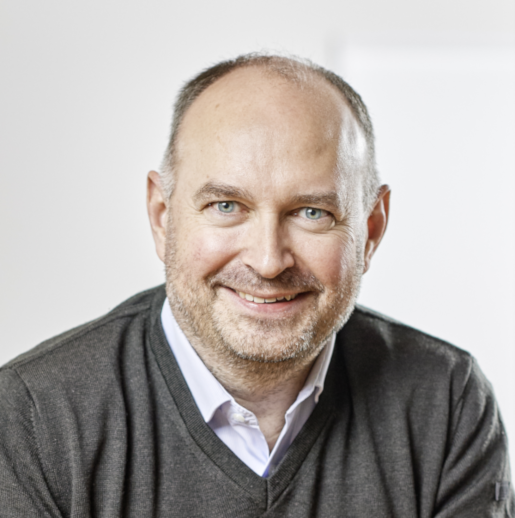 Not sure how these cultural differences relate to your own interview situation? In a free chemistry call, we can discuss your professional background, your experience and the expectations you may encounter in German-speaking job interviews.
Together, we'll explore how you can communicate your strengths clearly and confidently.
It's a first opportunity to see whether my coaching is the right next step for you.